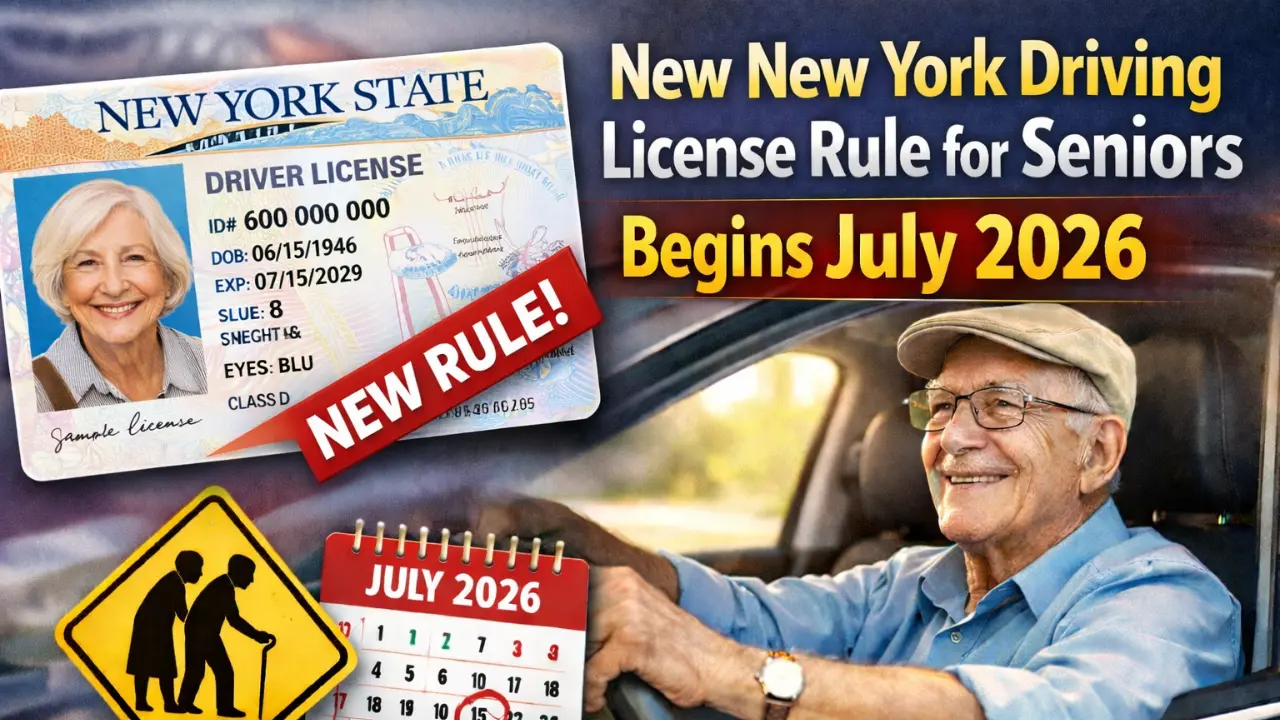
Starting July 2026, New York State will implement updated driver’s license renewal rules that apply specifically to drivers aged 70 and older. While the changes will not affect motorists under 70, they represent an important shift for senior drivers, focusing on safety, medical fitness, and fairness rather than age alone.
New York officials say the updated framework is designed to reflect longer life expectancy, advances in healthcare, and the reality that many older adults remain safe and capable drivers well into their later years. At the same time, the state aims to identify higher-risk situations earlier and reduce serious accidents involving age-related medical conditions.

Below is a detailed guide to what the new New York driving license rules mean, who they affect, and how seniors and families can prepare before the changes take effect.
Why New York Is Changing Senior License Rules
New York has one of the largest populations of older drivers in the United States. As the number of residents aged 70 and above continues to grow, transportation officials say it has become necessary to modernize licensing requirements.
According to the New York State Department of Motor Vehicles, the updated rules are intended to balance two priorities:
- Protecting public safety
- Preserving independence for capable senior drivers

Rather than imposing blanket age-based restrictions, the new system emphasizes individual driving ability, medical fitness, and driving history.
Who Will Be Affected?
The new regulations apply to New York drivers aged 70 and older who renew their licenses on or after July 1, 2026.
- Drivers under 70: No changes
- Drivers aged 70–74: Minor updates
- Drivers aged 75–84: Additional screening requirements
- Drivers aged 85 and older: More comprehensive evaluations
This tiered structure allows New York to apply stricter checks only where risk is more likely to increase.
Key Changes Under the New Rules
1. In-Person Renewal Requirements Updated

Under the revised law, in-person renewals will become more common for older drivers, but flexibility remains for those with strong safety records.
- Drivers aged 70–74 may still qualify for online or mail renewal if they:
- Have a clean driving record
- Have no medical restrictions
- Meet vision standards
- Drivers aged 75 and older will generally be required to renew in person at a DMV office.
Officials say in-person renewals allow for better screening and ensure potential concerns are identified early.
2. Expanded Vision Testing for Seniors
Vision testing is a central part of the new framework.
- Ages 70–79
- Mandatory vision screening at renewal
- No written or road test unless other risk factors exist
- Ages 80–84
- Vision testing required
- Additional evaluation may be requested if results raise concerns
- Ages 85 and older
- Vision testing mandatory
- Further testing more likely, depending on driving and medical history
Drivers who do not pass the initial vision screening may be referred to an eye specialist. Importantly, failing the first test does not automatically result in license suspension. Many drivers qualify after corrective measures such as updated eyewear.
3. Written Knowledge Tests Based on Risk Factors
The updated New York rules do not require written tests simply because of age.
A written knowledge test may be required if:
- The driver has recent traffic violations
- There is a history of at-fault accidents
- A medical condition affecting driving ability is reported
- DMV staff identify safety concerns during renewal
This targeted approach avoids unnecessary testing for seniors who continue to drive safely.
4. Behind-the-Wheel Road Tests for the Oldest Drivers
One of the most significant changes affects drivers aged 85 and older.
Under the new law:
- Drivers 85+ may be required to take a behind-the-wheel road test at renewal
- Road tests may also be required earlier if there are:
- Medical referrals
- Reports of unsafe driving
- Multiple recent violations
Drivers who do not pass may be offered:
- A retest
- Restricted licenses (such as daytime-only driving)
- Recommendations for alternative transportation
State officials stress that road tests are intended to evaluate ability, not punish age.
Expanded Family Reporting Provision
Another key update allows immediate family members to report concerns if they believe a senior driver may be unsafe due to a medical condition.
Who Can Submit a Report?
Only immediate family members, including:
- Spouses
- Adult children
- Parents
- Siblings
What Can Be Reported?
Concerns may include:
- Cognitive decline or dementia
- Vision impairment
- Chronic alcoholism
- Habitual use of narcotics or dangerous drugs
- Other medical conditions affecting driving ability
Safeguards in Place
- Reports cannot be anonymous
- The DMV must review evidence before taking action
- A report does not automatically revoke a license
This measure is designed to encourage early intervention while preventing misuse.
What Happens After a Report or Flag?
If a concern is raised, the New York State Department of Motor Vehicles may:
- Request medical documentation
- Require vision or written testing
- Schedule a road test
- Impose license restrictions
- Suspend or revoke a license in serious cases
Most cases result in evaluation or limited restrictions, not full loss of driving privileges.
Why These Changes Matter for Seniors
For many older New Yorkers, driving is essential for:
- Accessing healthcare
- Maintaining independence
- Staying socially connected
- Remaining in their homes longer
State officials say the revised rules aim to extend safe driving years, not shorten them.
How Seniors Can Prepare Before July 2026
Drivers aged 70 and above can take proactive steps now:
- Schedule regular eye exams
- Address traffic violations promptly
- Keep medical records current
- Consider refresher or defensive driving courses
- Have open conversations with family about driving ability
Preparation can make future renewals smoother and less stressful.
What New York Officials Say
The New York State Department of Motor Vehicles says the new rules reflect a more personalized, evidence-based approach to senior driver safety.
Age alone will not determine whether someone can keep their license. Instead, the state will focus on medical fitness, driving history, and demonstrated ability.
The Bottom Line
Beginning July 2026, New York’s new driving license rules will bring measured but meaningful changes for drivers aged 70 and older. While most seniors will only encounter vision tests and in-person renewals, older drivers with risk factors may face written or road testing.
The changes are designed to keep New York’s roads safer — while respecting the independence, dignity, and mobility of older drivers who remain fit to drive.