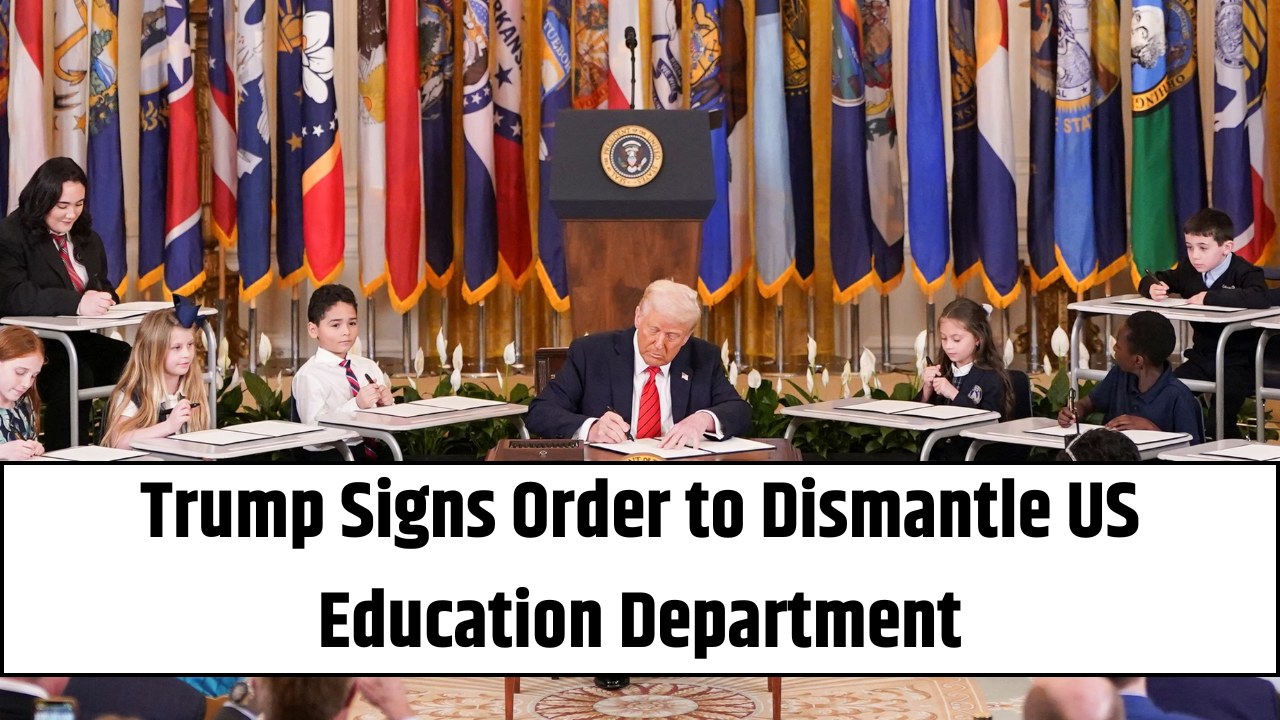
One of President Donald Trump’s central policy goals is to dismantle the U.S. Department of Education, and early in his second term he signed an executive order aimed at reducing the agency’s role and capacity. The department oversees federal student loans, administers programs for low-income and disabled students, and manages certain funding streams for public schools.
This week, Trump moved closer to that objective after the U.S. Supreme Court ruled that his administration may proceed with plans to lay off roughly half of the department’s workforce, affecting more than 1,000 employees.

In a 6–3 decision, the court’s conservative majority—three of whom were appointed by Trump—lifted a lower court injunction that had temporarily blocked the layoffs. The court’s three liberal justices dissented.
Trump celebrated the ruling on social media, calling it a “major victory” for parents and students. He said the decision would allow Education Secretary Linda McMahon to begin carrying out the executive order, which he described as a necessary step toward reforming federal education policy.
Trump and his allies have accused the department of promoting racial, sexual, and political ideologies in schools—claims that the agency disputes. Still, conservative efforts to eliminate the department long predate Trump and stretch back to its creation in 1979.

Because fully abolishing the agency would require congressional approval, Trump’s strategy has focused on shrinking its workforce, redistributing its responsibilities, and limiting its influence.
What the Department of Education does — and does not do
A common misconception is that the Department of Education runs U.S. schools or sets curricula. In reality, states and local school districts control instruction and school operations.
The department’s primary responsibilities include:
- Managing federal student loan programs
- Administering Pell Grants for low-income college students
- Supporting programs for students with disabilities
- Providing aid to schools serving students in poverty
- Enforcing civil rights laws that prohibit discrimination based on race or sex in federally funded schools
Budget and staffing

In fiscal year 2024, the Department of Education had a budget of $238 billion, representing less than 2% of the total federal budget.
The agency employs about 4,400 people, making it the smallest Cabinet-level department. Trump’s plan would reduce that workforce by approximately half.
Most public education funding does not come from Washington. State and local governments provide the majority of school funding. According to the Education Data Initiative, the U.S. spent more than $857 billion on primary and secondary education in 2024—about $17,280 per student.
Can Trump shut down the department?
Not on his own.
Abolishing the Department of Education would require congressional approval, likely including a 60-vote supermajority in the Senate. Republicans currently hold a 53–47 majority, meaning they would need at least seven Democratic votes—an unlikely outcome.
Support in the House is also uncertain. In 2024, an amendment to abolish the department failed after 60 Republicans joined Democrats in opposing it.
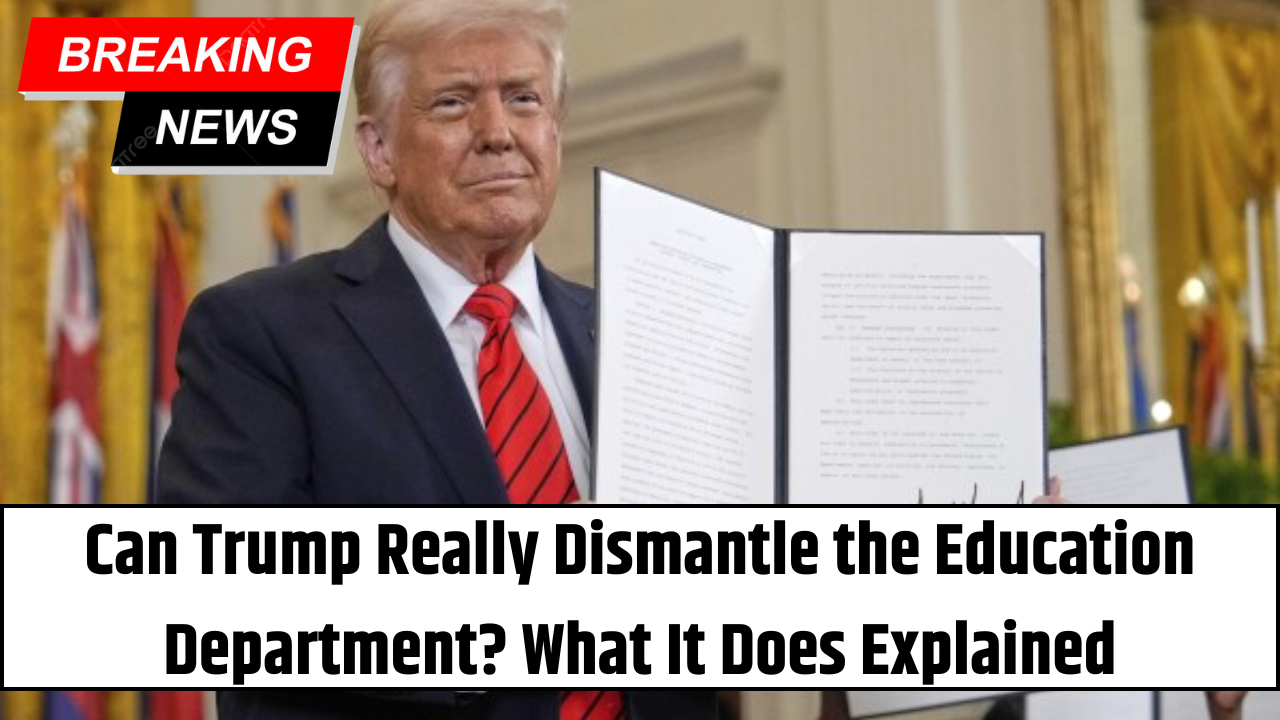
Trump’s executive order directs Secretary McMahon to “take all necessary steps” to facilitate the department’s closure and shift authority to states and local governments. At the same time, it instructs her to ensure the uninterrupted delivery of programs and services Americans rely on. The order does not include a timeline and has already faced legal challenges.
What happens to student loans?
Trump has proposed moving federal student loan programs out of the Education Department. Earlier this year, he announced plans to transfer student loan oversight to the Small Business Administration, but a judge quickly blocked the move.
The federal student loan portfolio totals more than $1.5 trillion, affecting over 40 million borrowers. The executive order compares the size of the loan system to a major bank, stating that the Education Department “is not a bank” and should return those functions to another agency.
Regardless of which agency manages the loans, borrowers will still be required to repay them. Recent court rulings and Trump administration policies have reversed some Biden-era efforts aimed at lowering costs and expanding debt forgiveness.
Why Republicans want to eliminate the department
Republican opposition to the Department of Education dates back decades. Ronald Reagan called for its elimination during his 1980 presidential campaign.
Many conservatives argue that education policy should be controlled locally rather than federally. More recently, Republicans have accused the department of advancing “woke” ideology related to race and gender.
Trump’s allies also favor expanding school choice, allowing families to use public funds for private or religious schools. Some conservatives contend that certain education-related responsibilities—such as civil rights enforcement—should be handled by other agencies like the Department of Justice.
For now, the department remains intact, but Trump’s efforts signal a continued push to reshape the federal government’s role in education.